
What Spray Foam Insulation Costs in Minnesota
No two buildings price the same. Here is what moves the number, so you can compare quotes on equal terms.
The Five Factors That Set the Price
1. Square footage of sprayed surface. Pricing follows the area being sprayed (wall surface, roofline or floor deck), not the building's floor plan. A 30x40 pole barn has far more sprayable wall and ceiling area than its footprint suggests.
2. Thickness (R-value target). Foam goes on in passes, so a 2-inch condensation-control layer on steel costs less per square foot than a 3.5-inch wall fill. Minnesota code sets the baseline thickness for each assembly. Your goals can go past it.
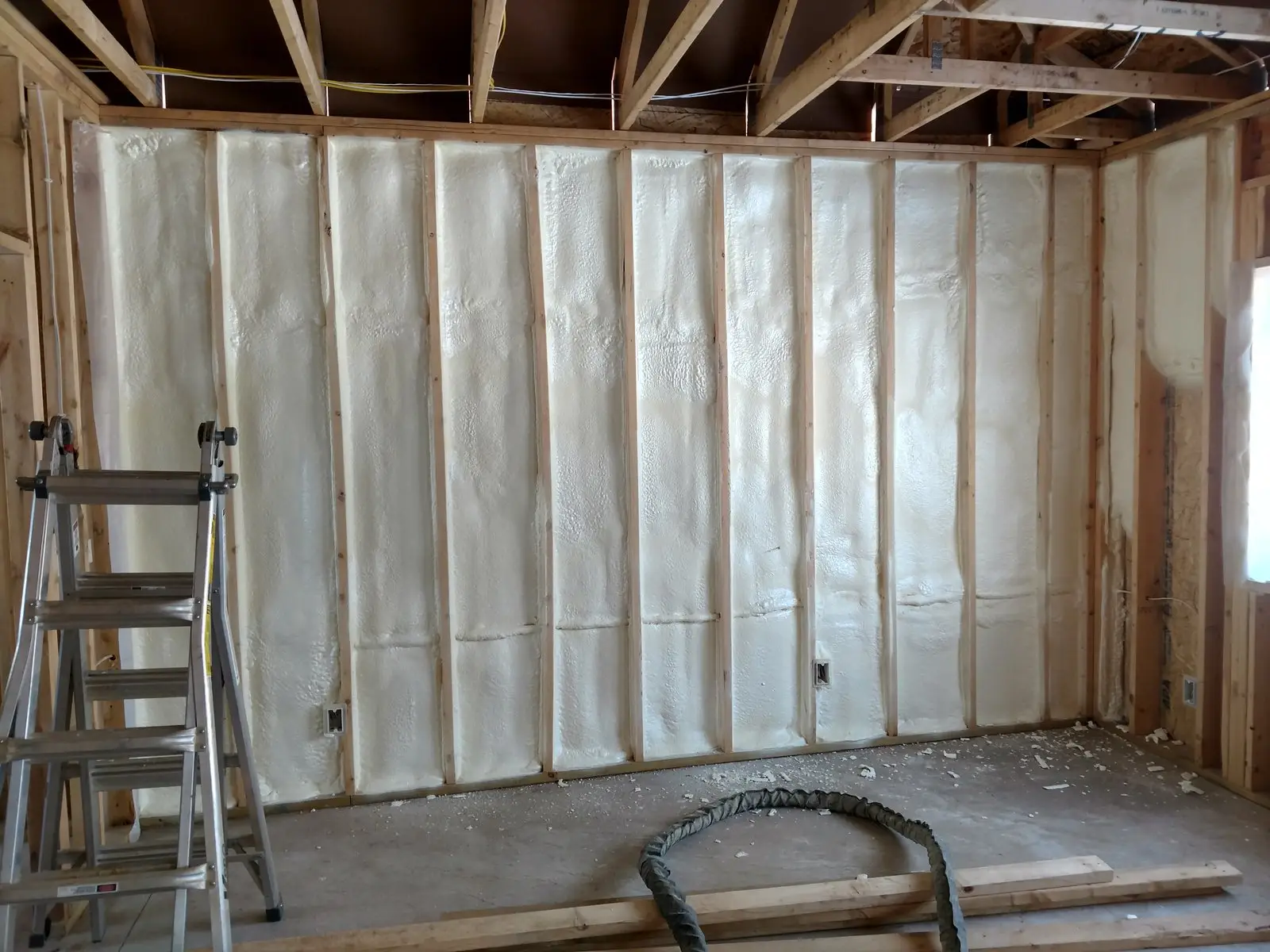
3. Closed-cell vs open-cell. Closed-cell costs more per inch. You get more R-value per inch for it, plus moisture resistance and rigidity, which is why we recommend it on steel buildings, rim joists and most Minnesota rooflines. Open-cell costs less and fills big cavities economically where moisture is not the enemy.
4. Prep and removal. If old or rodent-contaminated insulation has to come out first, removal is its own scope line. On occupied homes, masking and jobsite protection take real crew time too.
5. Access. A tight crawl space or a 4-foot attic hatch takes longer to work in than an open new-construction wall, and time is cost.
What Projects Look Like for Us
Our projects run from small rim-joist jobs to full commercial buildings. A typical one lands in the mid four figures, and larger pole barns and commercial work go above that. Treat that as context, not a quote. Your building sets your number.
How to Compare Quotes
Ask every bidder to write down the product (closed-cell or open-cell, and brand), the applied thickness per area, and the exact areas included. A low quote that is one inch thinner is not the same job, it is a cheaper job wearing the same name. Our estimates name all three, every time.
Is It Worth the Premium Over Fiberglass?
Depends where. On rooflines, rim joists and steel buildings, foam does two jobs fiberglass cannot do alone, and the premium pays for itself. On a simple, dry, vented attic floor that just needs R-value, blown-in insulation usually wins on value, and we will tell you so.
Want a real number for your building? Call (320) 232-7137. The estimate is free and the scope arrives on paper.